Most growing companies spend a staggering share of their IT budget protecting data — endpoint protection, SIEM platforms, zero-trust identity, encrypted backups. And they should. But there’s a parallel layer of business security that still runs, in many offices and commercial buildings, on hardware from the late 1990s: the front door.
The intercom panel at the entrance, the buzzer in the lobby, the analog handset at the back gate — in thousands of small and mid-sized businesses, these are the primary access control points for staff, contractors, couriers, and visitors. Yet they rarely appear on the same dashboard as the rest of the company’s security infrastructure. That gap is closing fast. A new generation of IP-based, cloud-connected intercom systems now plugs directly into visitor management software, HR platforms, CCTV networks, and even ERP and property management tools. For any company that takes physical security seriously — or simply wants to reduce the operational friction of running an office — this shift deserves real attention.
The Problem With Legacy Building Access Systems
Traditional hardwired intercoms were engineered for a single job: let someone downstairs press a button, speak to someone upstairs, and get buzzed in. That worked when offices had fixed staff hours, few visitors, and no concept of remote work. It doesn’t work nearly as well today.
Legacy systems present a long list of operational headaches. They generate no access logs, so when a package goes missing or an unauthorized person enters a restricted area, there’s no record of who was granted entry or when. They can’t distinguish between a delivery driver, a job candidate, and a stranger — everyone gets the same audio prompt and the same buzz. Integration with any other software is effectively impossible, which means every access event lives in a silo. And when the hardware fails — an amplifier burns out, a cable corrodes, a directory button breaks — repair typically requires a specialist willing to work on decades-old analog equipment, which is becoming rarer and more expensive every year.
For a modern business, the real cost of a legacy intercom isn’t the replacement hardware. It’s the lost visibility, the manual overhead of managing access, and the security blind spot that sits right at the physical perimeter.
How Intercom Technology Has Evolved
The intercom category has quietly undergone the same transition that transformed phone systems, CCTV, and access control over the last fifteen years. The shift is roughly as dramatic as moving from on-premise Exchange servers to a cloud-native email stack.
Four generations are now running in the wild simultaneously. Analog hardwired systems — still the majority of installed base in older commercial buildings — are reliable but closed. Digital hardwired systems added touchscreen directories and clearer audio but kept data inside the building. IP-based systems brought intercom panels onto the network, enabling remote management and basic integrations. And finally, cloud-native platforms — think ButterflyMX, Aiphone’s IX and IXG series, Comelit Ultra, Akuvox — treat the intercom the way modern SaaS treats any business function: as a service with a web dashboard, an API, a mobile app, and continuous updates pushed over the air.
What used to be a static piece of building hardware is now, in effect, an edge device that belongs to the company’s IT and security stack. That reframing is what makes modern intercom systems worth a second look — even for businesses that “already have one.”
Core Features of Business-Grade Intercom Systems
Not every company needs every feature on the spec sheet. But understanding the capabilities available today is the first step to building a sensible requirements list.
Cloud-native management and audit logs
Every entry event — who was called, who was let in, when, by whom, from which device — is captured centrally and available through a web dashboard. For regulated industries, this single feature can satisfy audit requirements that legacy systems simply can’t meet.
Mobile credentials and remote entry
Staff carry their credential on a smartphone. Visitors can be issued time-limited QR codes or one-time PINs. Management can grant or revoke access from anywhere in the world, in seconds. For distributed teams and buildings without a full-time receptionist, this capability alone often justifies the upgrade.
Video verification and recording
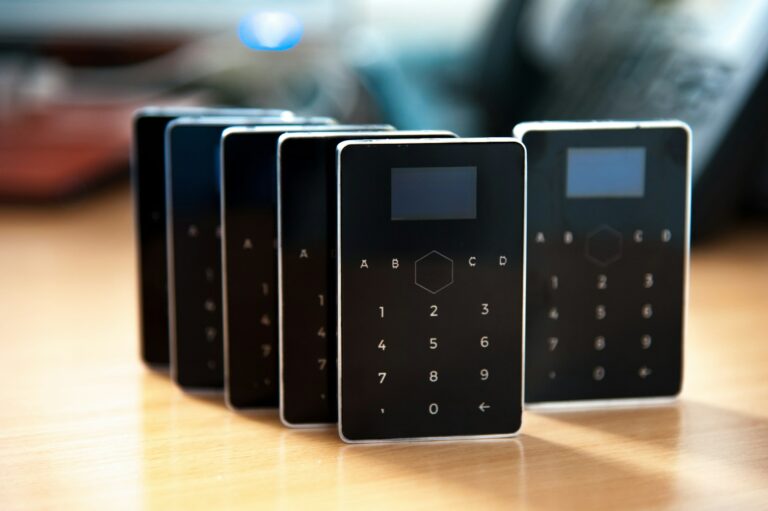
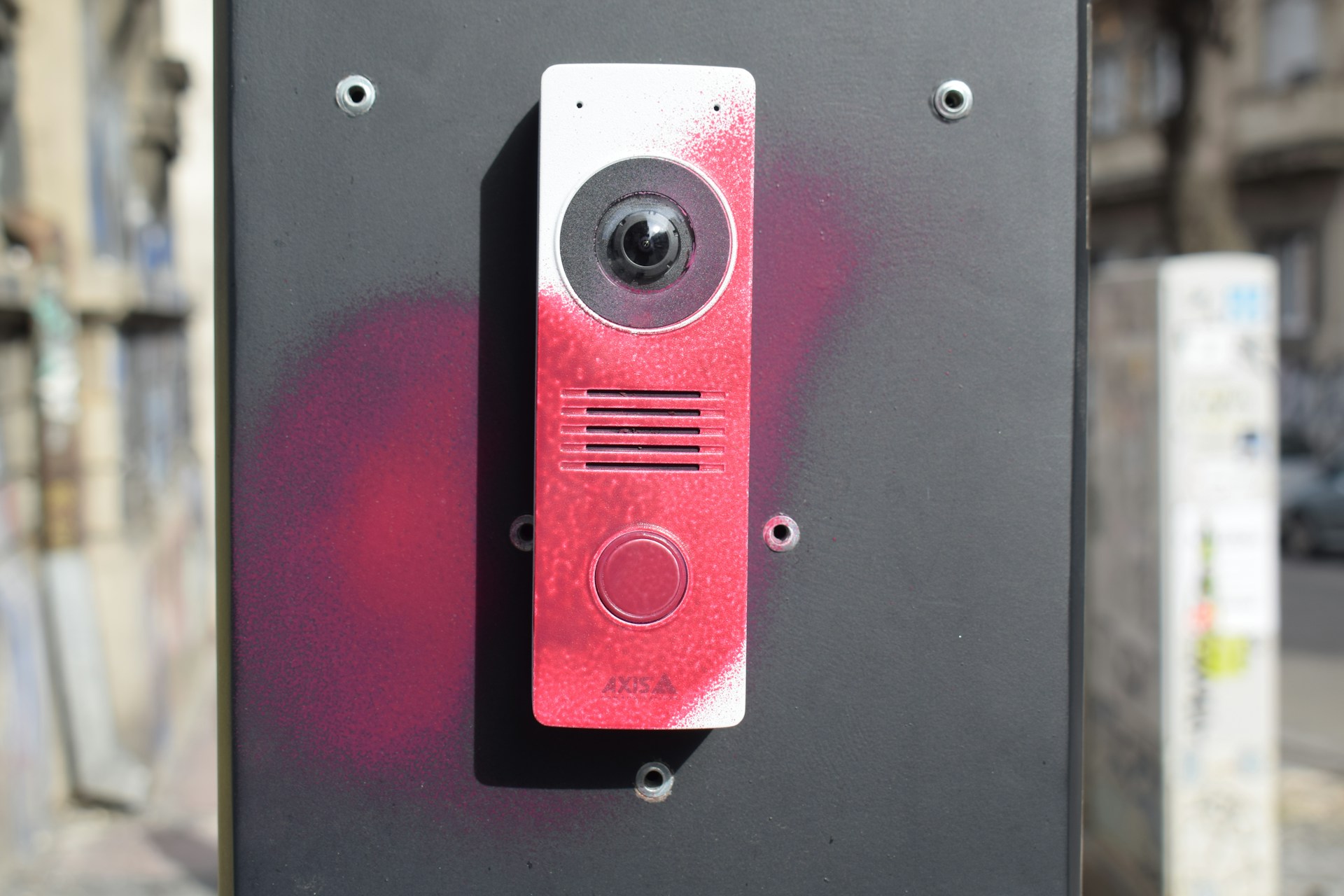
Two-way video at the entry panel eliminates the guesswork of audio-only buzz-ins. Footage is time-stamped and retained according to policy. When combined with CCTV, video intercom gives security teams a unified record of both the entry attempt and the surrounding context.
AI-assisted recognition and filtering
The latest generation of panels supports facial recognition for automatic entry of enrolled users, package detection, and motion filtering that distinguishes humans from animals, vehicles, and wind-blown foliage. These features meaningfully reduce false alerts and the labor cost of monitoring.
Multi-site and enterprise management
For companies operating several locations, enterprise-grade platforms allow central administration of every panel from one dashboard — granting and revoking access, pulling logs, and pushing firmware updates across the whole estate. This is where modern intercom systems start to look less like hardware and more like a SaaS product.
Integrating Intercom Systems With Business Management Software
The feature most often underestimated by buyers is also the one that produces the longest-term operational value: integration with the rest of the business software stack.
A cloud-native intercom system exposes events — an entry granted, a delivery accepted, a visitor pre-registered — as structured data. That data can flow into the tools a business already uses. HR platforms can provision and de-provision building access at the same time they handle onboarding and offboarding, eliminating the common gap where an ex-employee still has a working credential weeks after their last day. Visitor management software can sync with the intercom so pre-registered guests see their name on the entry screen and gain one-tap access. Property management platforms used by commercial landlords can reconcile tenant access lists automatically. And for companies with high-value inventory, access logs can be correlated with warehouse management or inventory systems to support loss-prevention investigations.
For the same reasons companies moved off siloed on-premise software in every other domain — better data, less manual work, tighter security posture — intercoms deserve to be on the integration roadmap too.
Industries Where Smart Intercom Systems Deliver the Highest ROI
The business case varies significantly by use case. In some industries, a smart intercom is a nice-to-have. In others, it pays back within a year.
Multi-tenant commercial real estate. Landlords managing several buildings get the clearest ROI: centralized access control across their portfolio, remote management without truck rolls, higher-grade tenant amenity, and reduced liability thanks to verifiable entry logs.
Healthcare and professional services. Clinics, dental practices, law firms, and accounting offices have regulatory obligations around who enters specific areas and when. A modern intercom with logged entry and role-based access supports compliance far more cleanly than a key-and-buzzer setup.
Logistics and industrial facilities. Gates, bay doors, and after-hours entry points benefit from telephone-entry and mobile-credential workflows, especially when drivers and contractors need temporary access on irregular schedules.
Corporate offices with hybrid work. When the building may be 80 percent empty on a Friday and 100 percent full on a Tuesday, traditional manned reception is expensive. Video intercom with mobile access lets a small operations team handle visitor flow without a full-time lobby presence.
Education and cultural institutions. Schools, colleges, and houses of worship increasingly need controlled entry with the ability to react quickly during emergencies. Smart intercoms give administrators the ability to lock down or open access from a single interface.
What to Look For When Planning an Intercom Upgrade
Moving from a legacy system to a modern platform is not plug-and-play — but it’s also not the multi-month project many operators fear. Getting a few decisions right at the planning stage saves substantial time and cost later.
Infrastructure compatibility. The biggest variable is the building’s existing wiring. Some modern systems can reuse legacy cabling, which significantly reduces installation cost. Others require fresh Cat6 runs. Before committing to a brand, have a technician survey the actual cable paths, conduit capacity, and power availability at each proposed panel location.
Open standards and interoperability. Intercom platforms lock you in to their ecosystem to varying degrees. Prefer vendors whose APIs and credential formats are documented, whose hardware supports standards such as OSDP for access control, and whose roadmap indicates continued investment in third-party integrations.
Security and encryption. Anything on the network is attackable. Favor systems with encrypted communication between panels, controllers, and the cloud, and check whether the vendor has published security documentation or completed independent audits. A smart intercom that becomes a lateral-movement entry point into the corporate network is a worse outcome than the legacy system it replaced.
Installer expertise. The difference between a high-performing smart intercom and a frustrating one is often the quality of the installation rather than the hardware. Look for a contractor who is authorized by multiple manufacturers (rather than locked into one line), has experience with both residential and commercial projects in properties similar to yours, and can demonstrate comfortable integration work with CCTV, access control, and network equipment. A professional partner for intercom systems installation will also handle the unglamorous but important details — cable routing that respects building codes, proper grounding, weather sealing on exterior panels, and tenant communication during the cutover.
Support model. Confirm what happens after installation. Warranty length, response time for service calls, whether firmware updates are included, and who owns the relationship with the manufacturer for RMA are all worth negotiating up front rather than discovering later.
The Business Case: ROI and Operational Benefits
Most companies frame an intercom upgrade as a security spend. That’s not wrong, but it understates the return. Smart intercom systems produce measurable operational savings that often pay for the hardware on their own.
Reduced reception and security labor is the most obvious gain: a video intercom with mobile unlock allows a single receptionist or property manager to handle a volume of visitor traffic that previously required two or three people. Insurance premiums sometimes drop when verifiable access logs and recorded entry events are in place, particularly for businesses storing high-value inventory or controlled substances. Tenant retention and amenity value rise sharply in multifamily and commercial real estate once residents and tenants experience mobile-credential access. And the operational cost of onboarding and offboarding staff drops when access provisioning is part of the same workflow as HR — no more hunting down lost fobs.
Put together, the financial picture for a mid-sized business is frequently a 12-to-24-month payback, with the softer benefits — better security posture, cleaner audit trails, less friction for everyone who enters the building — continuing to compound after that.
Closing Thoughts
The companies that take business security seriously have already extended the conversation beyond firewalls and endpoint agents. They’re looking at the full surface area — network, data, cloud, identity, and the physical perimeter. In that context, the front-door intercom is no longer a piece of building infrastructure to be ignored until it breaks. It’s a logged, managed, integrated edge device that sits squarely inside the modern security and management stack.
For operators who still run analog hardware at their main entry points, the upgrade path is more accessible than it was even three years ago. The technology has matured, the integrations are real, and the operational case stands on its own. The question is no longer whether to modernize — it’s which platform, which integrations, and which installation partner to build around.